Why white clover keeps Arun’s grasslands buzzing

By the demoduck.co.uk editorial team, using information published by Arun District Council News.
White clover is easy to overlook, yet this familiar wildflower supports pollinators and grassland habitats across Arun District. Known scientifically as Trifolium repens, it grows in lawns, parks, road verges and other grassy spaces.
Its long flowering season provides nectar for bees, butterflies and other insects from late spring into autumn. Beneath the surface, the plant also works with bacteria around its roots to add nitrogen naturally to the soil. Recognising it can therefore reveal more than the identity of a common plant: it can show where food for insects and the foundations of a wider grassland habitat are present.
How to identify white clover
The foliage is the quickest identification clue. White clover usually carries leaves made up of three leaflets. During the flowering season, these are accompanied by rounded clusters of creamy-white flowers.
Older blooms can develop a pink tinge, so one patch may contain flower heads in several shades. The change in colour does not mean that different clover species are necessarily growing together. Checking the three-leafed foliage and rounded flower cluster as a pair gives a clearer identification than relying on flower colour alone.
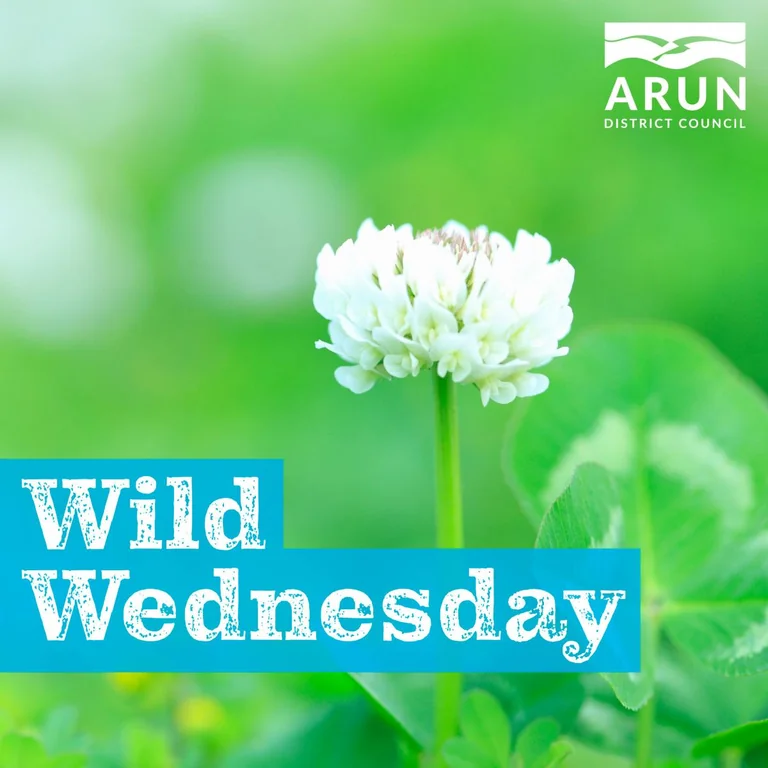
A useful approach is to examine the whole patch rather than one isolated leaf or bloom. First look for repeated groups of three leaflets, then check whether the flowers form pale, rounded clusters. If only foliage is visible, returning during the flowering season may provide the second identifying feature.
Most white clover has the familiar three-leaf arrangement. Occasionally, a leaf develops four leaflets, giving rise to the four-leaf clover’s well-known association with good luck. That uncommon form remains part of the same familiar plant described in the council’s wildlife spotlight.
When white clover flowers
White clover begins flowering in late spring and can continue into autumn. This extended season makes it a lasting source of nectar rather than a plant that offers food during only a short flowering window.
The appearance of a patch can change over that period. Newer flowers may be creamy white, while older heads can become pink-tinged. Looking for both shades can help readers recognise a patch containing blooms at different stages.

A flowering patch may also draw attention through its visitors. Bumblebees, honeybees and butterflies frequently feed on the blooms, while other insects use the plant as a food source. Watching a patch briefly can therefore help reveal its ecological role as well as confirm that it is in flower.
Why the flowers matter to Arun’s wildlife
White clover contributes to local biodiversity by feeding pollinating insects across several months. Its value comes partly from that continuity: flowers available from late spring through autumn can provide nectar over a substantial part of the active season for insects.
The clover is one element of a broader habitat. Insects supported by flowering plants form part of grassland ecosystems that also provide food and shelter for birds and small mammals. This does not mean those animals all depend directly on white clover; rather, the plant contributes to the mix of vegetation and insect life within the habitat.
Wildflower meadows and areas of longer grass are being encouraged on council-managed land across Arun District to help wildlife thrive. Where white clover grows among other plants in these spaces, its nectar adds to the resources available to bees, butterflies and other insects.

How white clover supports grassland soil
White clover belongs to the pea family. Like other members of that family, it works with bacteria associated with its roots to add nitrogen to the soil naturally.
Nitrogen supports plant growth, so this process can benefit surrounding vegetation as well as the clover itself. The significance is both above and below ground: the flowers provide food for insects, while the root relationship helps support the soil conditions needed by grassland plants.
This connection also explains why white clover’s role cannot be judged only by its size or abundance. A low-growing patch can simultaneously provide nectar, form part of wildlife cover and contribute to the health of the surrounding grassland.
Where to look across Arun District
White clover can appear beneath your feet in parks, lawns, road verges and grasslands across Arun District. Council-managed wildflower meadows and areas of longer grass are also places to look for it and observe how it fits among other vegetation.
Choose a grassy patch and look for repeated groups of three leaflets, followed by rounded creamy-white or pink-tinged flower heads. Then pause to see whether bumblebees, honeybees, butterflies or other insects are visiting. A closer inspection may even reveal an occasional four-leaf form among the usual groups of three.
Source: Arun District Council News
Context & actions About this article
Source check Source context
This guide reorganises Arun District Council’s species spotlight around identification, flowering season and habitat value.
- Identification details were limited to characteristics stated in the council source.
- The flowering period was retained as late spring through autumn.
- Wildlife and soil benefits were presented without adding unsupported statistics or advice.
- Source
- Arun District Council News
- Scope
- Arun District
- Updated
- 2026-07-22 14:44
Source check
Report a trust issue
Send a clear signal to community moderation if the source, facts or context need review.




Comments