London’s 1,251-call day brings a heatwave warning
By the demoduck.co.uk News Desk
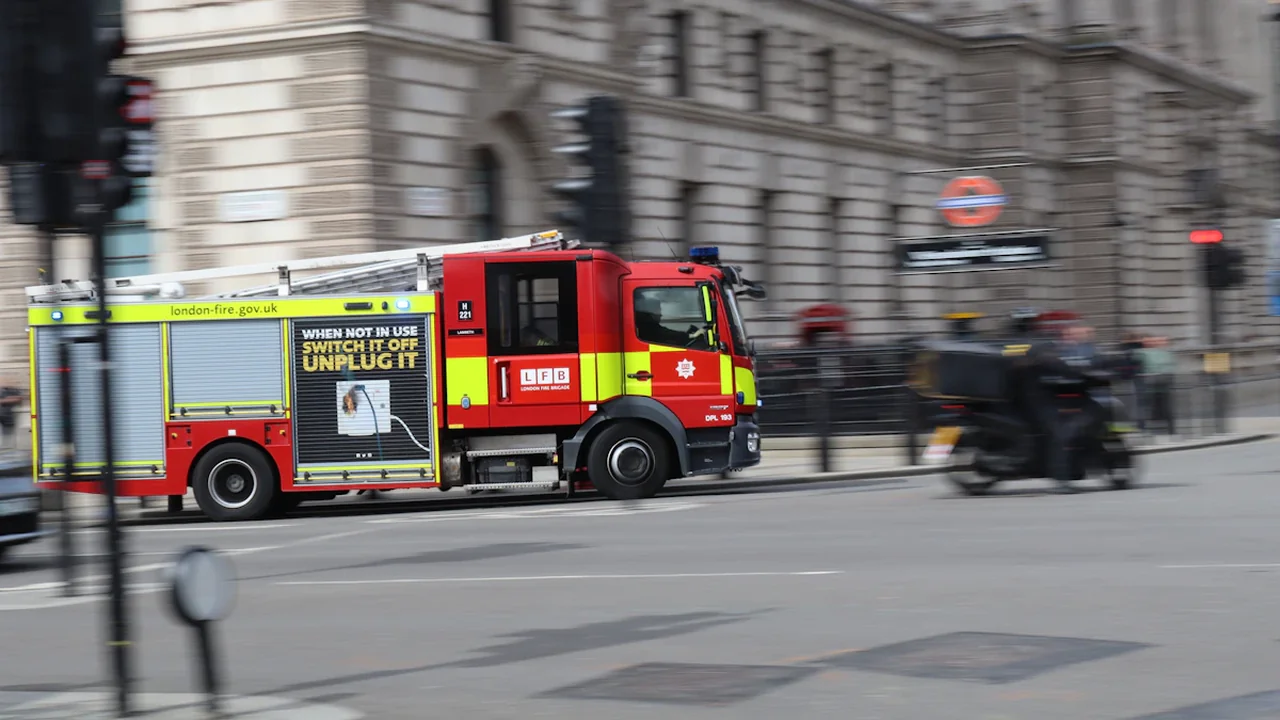
London Fire Brigade received 1,251 emergency calls in 24 hours on Monday, its highest daily total of 2026 so far. Control Officers handled reports from across the capital as crews attended fires involving homes, flats, businesses, gardens and open land.
The figure describes calls rather than separate incidents. Several fires generated dozens of reports from members of the public, including 92 calls about one outdoor fire in East Ham. It therefore shows the exceptional pressure on the Brigade’s control room, but does not mean firefighters attended 1,251 different emergencies.
The last time the Brigade received at least as many calls was 8 July 2025. Officials issued the latest figures alongside a warning about further hot weather and an elevated wildfire risk assessed by the Natural Hazards Partnership.
Five fires generated 237 calls between them
The largest reported concentration came from Newham Way in East Ham, where four fire engines and about 25 firefighters responded to an outdoor fire. Other significant incidents stretched from Kensal Town and Barking to Lewisham and Wood Green.
| Incident and calls | Fire Brigade response |
|---|---|
| Newham Way, East Ham — 92 | Four engines and about 25 firefighters attended an outdoor fire. |
| West Row, Kensal Town — 59 | Four engines and about 25 firefighters tackled a roof-garden fire. |
| Mast Street, Barking — 33 | Two engines attended burning wooden hoarding and compost. |
| Cressingham Road, Lewisham — 30 | Three engines responded to a garden fire. |
| High Road, Wood Green — 28 | Twelve engines and about 80 firefighters attended a building fire for 12 hours. |
| Mulgrave Road, Woolwich — 28 | Four engines and about 25 firefighters attended a flat fire; Control Officers gave residents fire-survival guidance before crews arrived. |
| Lakeland Road, Plumstead — 26 | Four engines and about 25 firefighters responded to a grass fire. |
Crews also attended incidents in Lambeth North, Bromley, Ilford, Fulham, East Ham and Old Kent Road. The beauty-salon fire on Horns Road in Ilford required eight engines and about 60 firefighters, with crews remaining at the scene for more than 14 hours.
Heat raises the pressure on open spaces and waterways
Assistant Commissioner for Operational Resilience and Control Patrick Goulbourne said the Brigade was monitoring where resources were needed during the hot spell. Specialist Terrain Support Vehicles were prepared for fires in open areas, while water-rescue teams were ready for emergencies across London’s 370 miles of waterways.
The Brigade has not attributed every call or listed incident to the heat. Its warning is focused on the conditions surrounding the busy day: dry open spaces can face a greater wildfire threat, while more people may enter rivers, reservoirs and lakes to cool down.
Wildfires can demand substantial time and resources and can damage communities and livelihoods. The prolonged deployments in Wood Green and Ilford show how a single incident can keep dozens of firefighters committed for many hours.

Disposable barbecues and smoking materials remain key risks
Londoners visiting parks or other open spaces are being asked not to bring disposable barbecues. They can retain enough heat to start a fire for hours after appearing to have been extinguished.
Smoking materials should be put out and discarded safely. Rubbish should go into an appropriate bin or be taken home when no bin is available.
Anyone using a barbecue at home should keep it away from fences, sheds and other flammable materials. The Brigade advises against barbecuing on balconies or placing equipment on garden decking.
Open-water warning extends to parents and teenagers
The Brigade is also asking parents, teachers and guardians to discuss water safety with young people following more than 100 accidental drownings across London since 2020. Its interactive safety map records more than 1,500 water-related incidents attended by firefighters over the same period and allows locations to be examined by year and hazard.
Swimming should be limited to designated areas where lifeguards and safety equipment are present. Anyone in difficulty should ‘float to live’: tilt the head back with the ears submerged, spread the arms and legs, move the hands gently to stay afloat, then call for help or swim to safety once breathing is under control.
Source: London Fire Brigade News
Context & actions About this article
Source check Source trail
The call total, incident details and safety guidance were checked against London Fire Brigade’s July 2026 report.
- Distinguished the 1,251 emergency calls from the number of separate incidents.
- Checked the listed call counts, appliance numbers and firefighter deployments.
- Retained the Brigade’s caveat that this was the busiest day of 2026 so far, not an all-tim...
- Kept fire and water-safety advice within the guidance supplied by the Brigade.
- Source
- London Fire Brigade News
- Scope
- London
- Updated
- 2026-07-21 11:14
Source check
Report a trust issue
Send a clear signal to community moderation if the source, facts or context need review.


Comments