Nottingham heat network studies target 737 homes
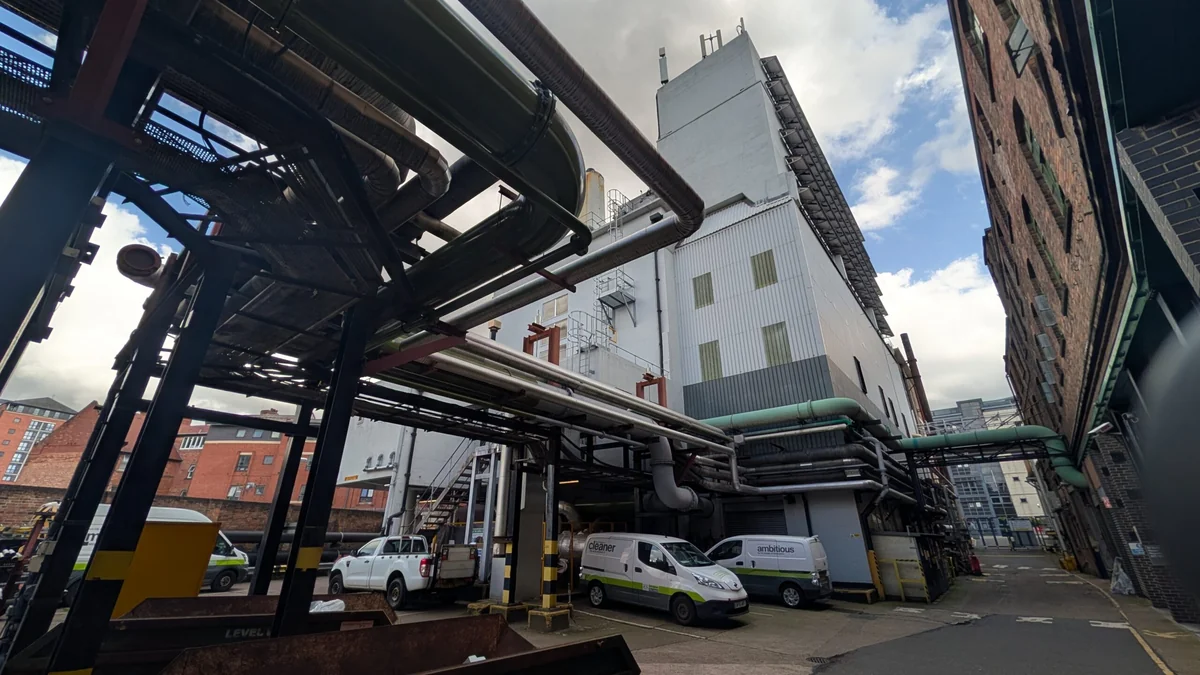
Nottingham City Council has secured Government funding for detailed studies into the next phase of the city’s district heating network, with work due to begin in June 2026.
The funding, awarded through the Department for Energy Security and Net Zero’s Heat Network Efficiency Scheme, will pay for two optimisation feasibility studies. The council says the work will examine how heat is generated, distributed and used, with the findings expected to guide future investment decisions.
The studies directly cover homes serving 737 households, with the council saying the learning could help improve performance across wider parts of the Nottingham district heating network.
Government funding for heat network studies
The Heat Network Efficiency Scheme funding is intended to support technical studies rather than immediate construction work. Engineers will look at energy centres, substations and the route from central heat generation through to individual homes.
Nottingham’s district heating network was first established in the 1970s and has operated for more than 50 years. It now supplies heat and hot water to around 5,000 domestic and commercial customers across the city.
The council says the local heat system helps reduce exposure to volatile wholesale gas markets because heat is generated locally. The new studies will focus on whether the existing system can be run more efficiently, remain resilient over the long term and continue supporting carbon reduction targets.
Manvers Court and St Ann’s sections under review
Two parts of the network have been selected because their findings may apply beyond the specific buildings and phases being studied.
| Area | Scope of study |
|---|---|
| Manvers Court | A 14-storey block of flats, selected as a model for two identical buildings on the same estate, with potential learning for around 270 council flats |
| St Ann’s phases 6 and 12 | A network section serving 647 households, chosen to represent a wider system with similar design |
| Start date | Feasibility study work scheduled to begin in June 2026 |
Together, the two study areas cover 737 households directly. The council says the results could be applied more broadly, including to sections of the wider heat network serving around 5,000 customers.
Limited resident contact during technical checks
A small number of households may be contacted as part of information gathering and technical assessment work. Nottingham City Council says residents will be informed and supported during any site visit, with involvement managed to minimise disruption.
The work is not presented as an immediate change to tariffs or service arrangements. Instead, the studies are expected to identify where future improvements could lower operating costs, maintain reliability and support further carbon savings over time.
Cllr Sam Lux, Executive Member for Environment and Sustainability, said the network had provided low-carbon heat to thousands of homes for more than five decades. She said the funding would help identify where future improvements and investment could deliver the greatest benefit for residents.
Findings to shape future investment
The council has not announced a final programme of works from the studies. The findings will inform future decisions on upgrades, resilience and performance across the district heating system.
Work on the feasibility studies is scheduled to begin in June 2026.
Source: Nottingham City Council
Context & actions About this article
Source check Source trail
This article is based on Nottingham City Council’s published funding update and keeps the scope to the named study areas and stated timetable.
- Confirmed the funding source as the Department for Energy Security and Net Zero’s Heat Net...
- Checked the two study areas named in the source: Manvers Court and St Ann’s phases 6 and 1...
- Kept household numbers to the figures stated by the council: 737 directly covered and arou...
- Included the stated start timing of June 2026 without adding unsupported completion dates.
- Source
- Nottingham City Council
- Scope
- Nottingham
- Updated
- 2026-05-27 12:19
Source check
Report a trust issue
Send a clear signal to community moderation if the source, facts or context need review.



Comments