Walthamstow Wetlands adds playful signs for birdwatchers
A walk towards Walthamstow Wetlands now comes with a new set of signs aimed as much at imagination as direction.
New bird-themed signs have been installed at the wetlands and around Coppermill Lane, using colour, humour and migration routes to tell a local story about the birds that pass through the Lee Valley. The project was launched on Wednesday 13 May after two years of workshops, meetings and design work with residents, schoolchildren and community groups.
The signs were created by Europa and what if: projects, with support from Waltham Forest Council and St James Big Local. Their unusual idea is simple enough to stop people on a walk: what would signage look like if birds were part of the audience?
New signs on the route to Walthamstow Wetlands
The installations can be found on the approach to Walthamstow Wetlands and at Coppermill Lane, an area already shaped by water, wildlife, industry and residential streets.
Instead of conventional wayfinding alone, the project uses playful sign formats inspired by bird life. Some pieces are imagined as signs “for birds to read”. Others borrow from the idea that birds perceive colour differently from humans, with design choices that point to a wider visual world than people usually notice.
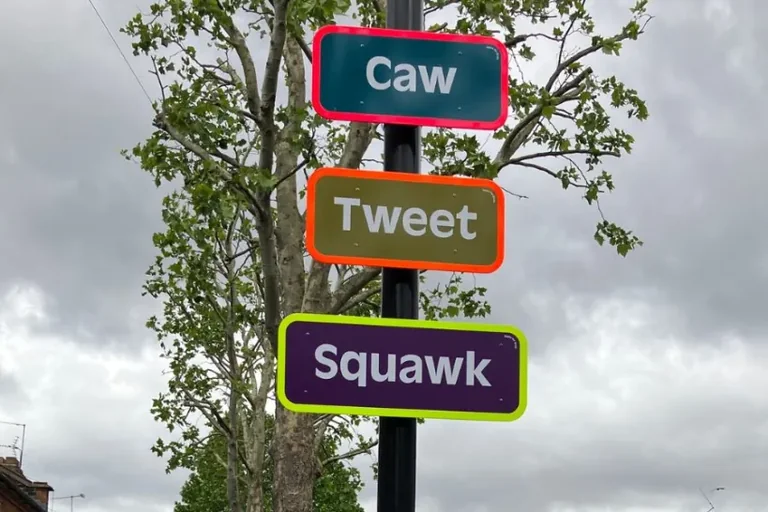
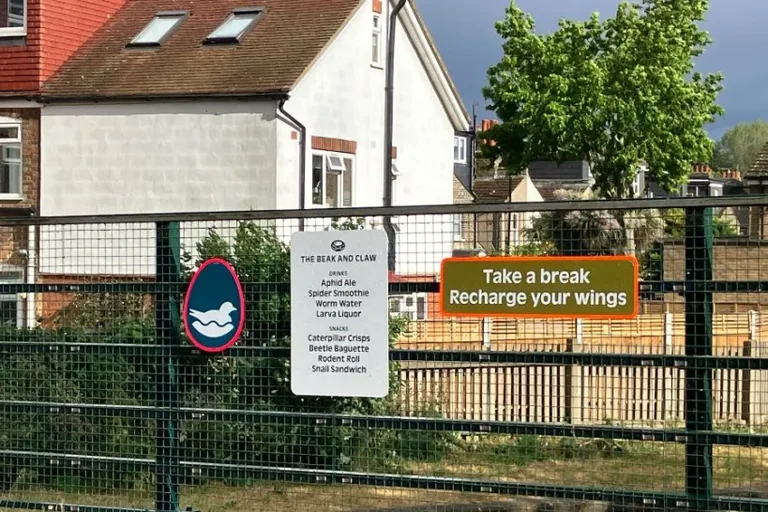
There are also humorous touches, including bird-oriented messages, calls and menu-style ideas. The tone is light, but the subject behind it is serious: the wetlands sit within a much larger network of habitats used by migratory birds.
For local walkers, the change means the route into the wetlands now carries more visible cues about the species that move through the area, rather than treating the landscape as a backdrop.
Migration routes behind the humour
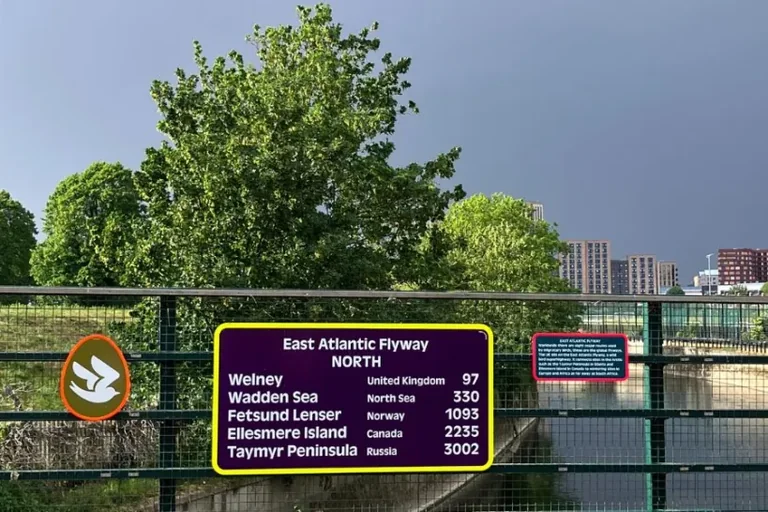
The project places the East Atlantic Flyway at the centre of the artwork. This migration route links wetlands across Europe and Africa, with birds moving between feeding, breeding and resting sites across vast distances.
Walthamstow Wetlands and Coppermill Lane are presented as one stop in that wider ecological chain. The source material names species including the Common Ringed Plover, Osprey, Black-tailed Godwit, Common Tern and Red Knot as examples of birds that connect the area to other countries through their journeys.
Some of the signs reference “south-facing” ideas and Ramsar-recognised wetlands, a term used for wetlands of international significance. In a local setting, that gives the project a wider frame: a familiar walk in Walthamstow is also part of a story about habitats far beyond London.
The result is public art that asks people to look at signs, colours and symbols differently. It also draws attention to the way urban nature sites depend on routes and landscapes that stretch across borders.
Residents and schoolchildren shaped the designs
The signs were co-created through workshops, meetings and collaborative design activities over the past two years. Participants included the Lee Valley Regional Park Authority, Coppermill Lane Residents Group, Coppermill Primary School and local people who joined workshops at The Mill.
The project also included input from Chukwuike Ebuzome of Finima Nature Park in Nigeria, adding an international voice to a scheme focused on migratory birds and connected wetlands.
Gareth Morris, Director of what if: projects, said the work was inspired by the landscapes near Coppermill Lane and by collaboration with local people of different ages and backgrounds. He also linked it to an earlier project with Europa, Flowers for Sutherland Road, which was completed on shop shutters in 2024.
Robert Sollis, Co-founder of Europa, said the project reflected how migration brings life and connection to places. “Just as migratory birds enrich the Lee Valley by travelling vast distances to make it their home, this project reminds us that migration – whether of birds or people – brings life, connection, and wonder to the places it touches.”
A local art project with a wider ecological map
For Walthamstow residents, the new signage adds a fresh layer to a well-used route: part artwork, part nature prompt, part community-made landmark.
It also gives younger participants and local groups a visible stake in the area around Coppermill Lane. Public art of this kind can make everyday routes feel more specific to the people who use them, especially when the designs come from local workshops rather than being dropped into place fully formed.
The signs were installed this spring and formally celebrated on Wednesday 13 May with those involved in the project. They can be seen on the approach to Walthamstow Wetlands, where the birds named in the artwork continue to act as natural ambassadors between local paths and faraway wetlands.
Source: Waltham Forest Council
Context & actions About this article
Source check Source trail
This article is based on Waltham Forest Council's published account of the Walthamstow Wetlands signage project.
- Confirmed the project location as Walthamstow Wetlands and Coppermill Lane.
- Checked the named project partners: Europa, what if: projects, Waltham Forest Council and...
- Retained the launch date given in the source: Wednesday 13 May.
- Matched the ecological context to the East Atlantic Flyway and Ramsar references cited in...
- Source
- Waltham Forest Council
- Scope
- Walthamstow
- Updated
- 2026-05-28 19:02
Source check
Report a trust issue
Send a clear signal to community moderation if the source, facts or context need review.




Comments