Plymouth Devonport alert test: no action on 17 June
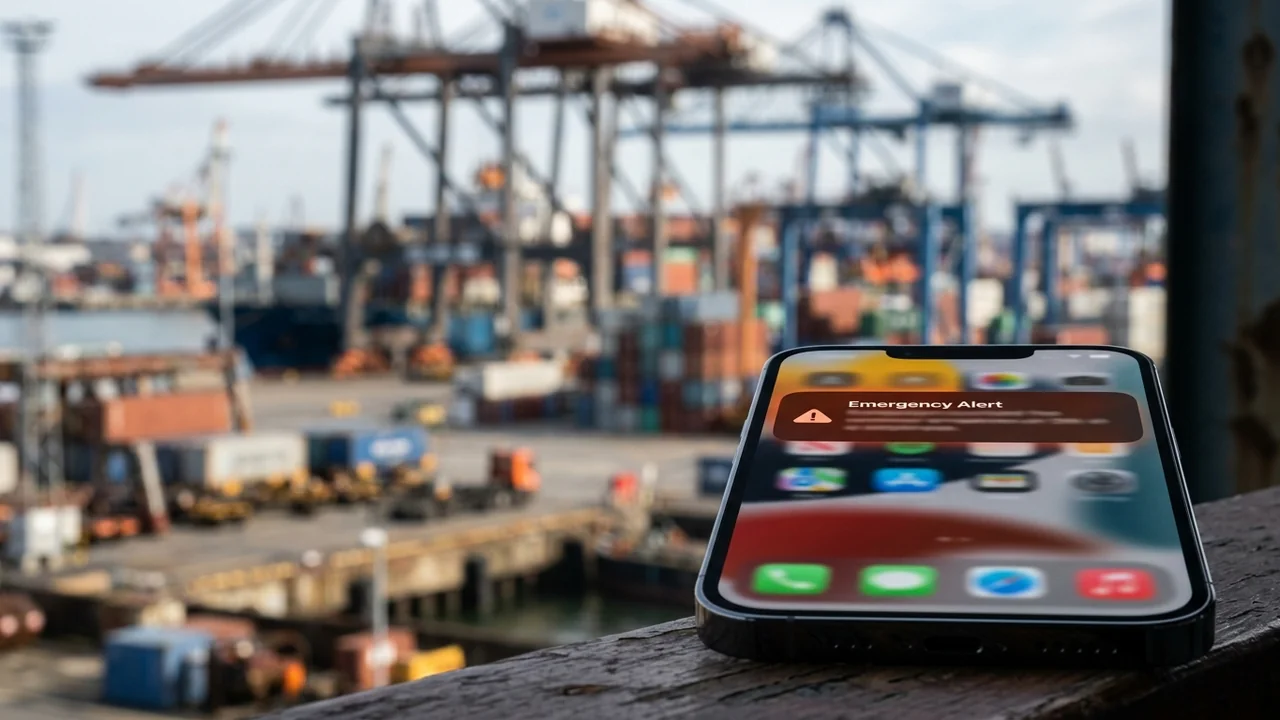
Residents around Devonport Royal Dockyard and the Cattedown fuel depot may receive emergency alert messages on Wednesday 17 June, as agencies test how they would inform the public during a major incident.
The exercise is not a live emergency. Plymouth City Council says recipients of the messages will not need to take any action, and some households may also receive a leaflet as part of a simulated stable iodine tablet distribution.
Date: Wednesday 17 June 2026. Time: not specified by the source. Venue: Devonport Royal Dockyard and surrounding areas, with a similar alert test near the Cattedown fuel depot. Cost: not applicable; this is not a ticketed public event. Who it affects: residents living near Devonport Royal Dockyard, the Cattedown fuel depot, and households in the Detailed Emergency Planning Zone.
Emergency alerts will be tested around Devonport
The planned emergency preparedness exercise will test the public notification system that would be used to alert residents by text message or email in the unlikely event of a radiation emergency at Devonport Royal Dockyard.
The dockyard supports nuclear-powered submarines for the Royal Navy. The alert process is one of the measures set out in the Devonport Off-site Emergency Plan, known as DOSEP, which explains how public agencies and site operators would work together if an incident required protective action.
A similar alert for residents living near the Cattedown fuel depot site will also be tested on the same day. The source notice makes clear that people who receive these messages should not respond or take protective action because the alerts are part of the exercise.
Anyone who wants to receive emergency alerts can sign up through Plymouth City Council’s website.
Leaflets will simulate stable iodine tablet distribution
The 17 June exercise will also include personnel simulating the distribution of stable iodine tablets to some households. Instead of tablets, residents involved in that part of the test will have a leaflet posted through their door.
Stable iodine tablets are included in DOSEP as a public protection measure for households in areas downwind of a radiation incident. The tablets are intended to help protect the thyroid from the harmful effects of radioactive iodine.
For this exercise, no tablets are being issued for real and residents who receive a leaflet do not need to do anything. The leaflet drop is a rehearsal of the process agencies would use if a real incident required that measure.
The planning zone reaches parts of Cornwall
The measures being tested focus on the Detailed Emergency Planning Zone, which extends 1.5km from the submarine berths at Devonport.
That zone covers areas close to the dockyard and also includes a small area of Torpoint and Wilcove in South East Cornwall. Households in the zone receive a booklet explaining what to do in the event of a radiation emergency.
An updated edition of that booklet is due to be distributed to households in the Detailed Emergency Planning Zone over the next few weeks. The booklet and further information about emergency plans for Devonport are available through the emergencies section of Plymouth City Council’s website.
Agencies involved in the exercise
The plans being tested involve Plymouth City Council, the MoD, Babcock International Group, emergency services, the UK Health Security Agency and other responding agencies.
Their shared role under DOSEP would be to coordinate public information and protection measures if an incident occurred at the site. The 17 June exercise is designed to test those arrangements before they are ever needed in a real emergency.
For residents, the practical instruction is simple: if an alert message arrives on Wednesday 17 June, or if a leaflet is posted through the door as part of the exercise, no action is required.
Source: Plymouth City Council
Context & actions About this article
Source check Source trail
This article was prepared from Plymouth City Council’s published notice about the 17 June Devonport emergency preparedness exercise.
- Checked the exercise date against the source notice: Wednesday 17 June 2026.
- Confirmed that recipients of test messages and leaflets are told no action is required.
- Verified the named agencies involved: Plymouth City Council, MoD, Babcock International Gr...
- Checked the stated planning area: a 1.5km Detailed Emergency Planning Zone from the submar...
- Source
- Plymouth City Council
- Scope
- Plymouth
- Updated
- 2026-06-13 19:07
Source check
Report a trust issue
Send a clear signal to community moderation if the source, facts or context need review.




Comments