Leeds burial finds reveal 4,000-year-old local lives
By demoduck.co.uk editorial team
Fragments of a decorated clay urn, a burned bone pin and the broken blade of a flint knife have emerged from a Bronze Age burial mound beneath a modern housing site in Drighlington, offering a close view of how some of Leeds’ earliest known communities marked death around 4,000 years ago.
The discoveries were made at Pitty Close Farm during archaeological work linked to redevelopment for housing. The objects and human remains are now part of the archaeology collection at Leeds Discovery Centre, where selected finds are being prepared for public display later this year.
Four cremation pits beneath a housing site
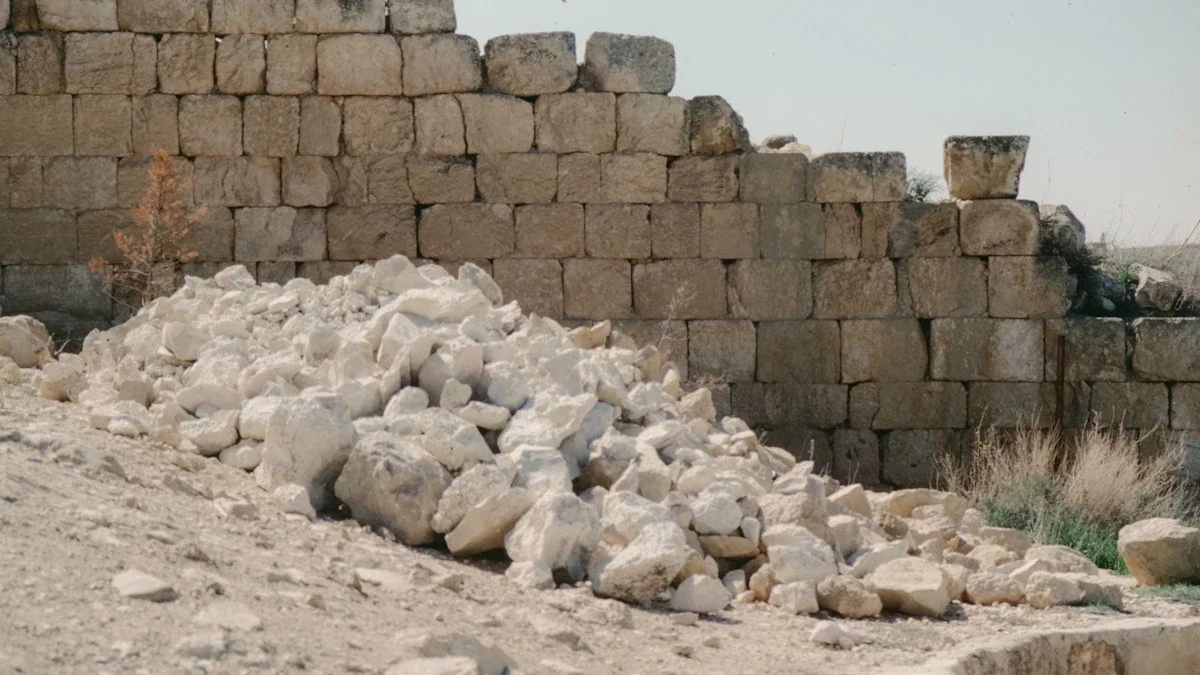
Archaeologists from Archaeological Services WYAS were called to the Drighlington site in 2020 as part of investigations before redevelopment. Their work uncovered the partial remains of a barrow, an ancient circular burial monument usually formed from earth and stone and often set within a ring ditch.
Inside the monument, the team found four cremation pits grouped within an area of around two square metres. The pits contained charcoal and the cremated bones of three adults and a child aged between nine and 12.
Radiocarbon dating placed the earliest cremation at around 1889 to 1701 BC, in the Early Bronze Age. That places the burials long before written records of Leeds, at a time when communities were beginning to leave more visible traces in the landscape through monuments, settlement patterns and ritual sites.
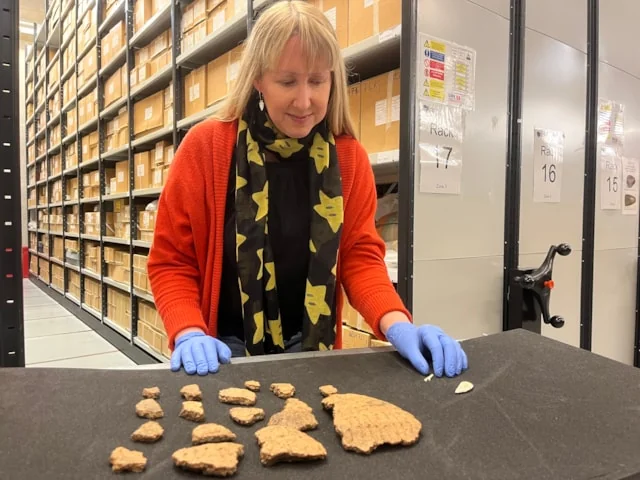
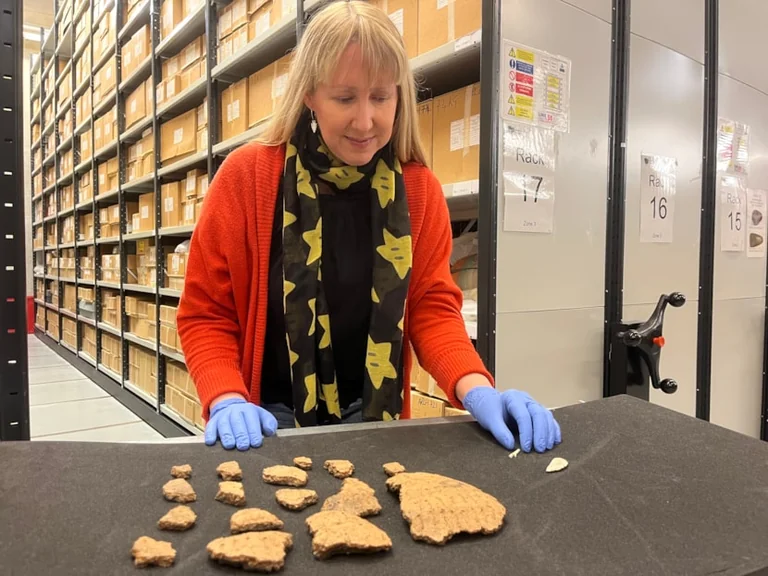
One individual’s remains were found inside fragments of a collared urn. The urn was decorated with twisted cord impressions and a pattern that specialists believe may have been made by hand using a cow-rib spatula.
A bone pin and flint knife point to funeral ritual
The burial also contained part of a pin carved from animal bone and the shattered blade of a finely worked flint knife. Both objects had been burned, indicating they were likely placed on the funeral pyre before being buried with the remains.
The flint used for the knife was not common in the area, suggesting it may have been a valued possession. Together with the urn and bone pin, the objects have led experts to suggest that the person buried with them may have held high status within Early Bronze Age society.
Such finds give archaeologists more than a list of objects. They show choices made by living people: what was placed with the dead, what materials were valued, how much labour went into the monument, and how a burial place may have helped a community mark its connection to a specific landscape.
Kat Baxter, Leeds Museums and Galleries’ curator of archaeology, said the discovery gives “a glimpse into how some of the Early Bronze Age communities in Leeds lived and died.” She said this was a period when cremation, urn burial and circular monuments such as barrows became more common as people began living in more permanent settlements.
Why the Drighlington finds matter to Leeds
The location is part of the story. Pitty Close Farm is not a remote ceremonial landscape preserved untouched for visitors; it is a modern development site where the remains of an ancient burial monument were identified because archaeology was required through the planning process.
David Williams, manager of the West Yorkshire Archaeology Advisory Service, said discoveries of this kind show the value of developer-funded archaeology. Without that process, he said, the prehistoric monument would have been lost.
For Leeds, the finds add detail to a much older local history than the city’s industrial, medieval or Roman-era associations. They point to communities already gathering, burying their dead and establishing roots in the area roughly four millennia ago.
Councillor Salma Arif, Leeds City Council’s executive member for economy, said it was “absolutely incredible” to think people were building communities in Leeds around 4,000 years ago, adding that the archive would help visitors learn more about those who lived in the area long before the modern city took shape.
Artefacts heading to Leeds Discovery Centre
The human remains, artefacts and excavation data from the Bronze Age burial mound will be stored at Leeds Discovery Centre. The centre holds archaeological archives from across Leeds Metropolitan District and is used for exhibitions, learning and research.
The urn, bone pin and flint knife from Pitty Close Farm are expected to go on display to visitors later this year, alongside selected objects from the recently acquired East Leeds Orbital Archive.
Leeds Discovery Centre is open to the public for pre-booked tours. It operates as a Give What You Can museum, with visitors invited to donate when booking online or in person at reception if they are able.
Source: Leeds City Council
Context & actions About this article
Source check Source trail
This article is based on the Leeds City Council source item and keeps the dating, location, finds and display details tied to that published account.
- Confirmed the site as Pitty Close Farm in Drighlington, Leeds.
- Checked that the finds included cremated remains, a collared urn, a bone pin and a flint k...
- Matched the radiocarbon date range to around 1889 to 1701 BC.
- Verified that selected artefacts are due to be displayed at Leeds Discovery Centre later t...
- Source
- Leeds City Council
- Scope
- Leeds
- Updated
- 2026-06-01 09:45
Source check
Report a trust issue
Send a clear signal to community moderation if the source, facts or context need review.



Comments