How Leicester Fossils Shaped David Attenborough
By the demoduck.co.uk editorial team
Source published: 30 April 2026
Long before Sir David Attenborough brought distant habitats into millions of homes, fossils in Leicester were demanding his attention. As a boy, he collected specimens, tried to identify them and carried them to Leicester Museum & Art Gallery in search of answers.
That childhood curiosity became the foundation of an eight-decade career in natural-history broadcasting. Attenborough turned 100 on 8 May 2026, placing fresh attention on the Leicester collections, classrooms and university surroundings that helped form his view of the natural world.
A childhood shaped by the University of Leicester campus
The Attenborough family moved to Leicester in 1932 after David’s father, Frederick Attenborough, became the second principal of University College, the institution now known as the University of Leicester. The family lived on the campus, giving David and his brothers Richard and John a distinctive childhood setting shaped by academic life.
All three boys attended nearby Wyggeston Grammar School for Boys, now Wyggeston and Queen Elizabeth I College. Beyond school, David explored the local landscape and developed a particular interest in rocks, fossils and living things.
The Leicester of his formative years was therefore more than a biographical address. The university grounds, his school and the city museum formed a compact network of places where observation could develop into structured knowledge.
Museum collections gave his discoveries meaning
Leicester Museum & Art Gallery became one of the young naturalist’s regular destinations. Attenborough visited its natural-science and geological collections and also worked there as a volunteer.
Those collections allowed him to compare objects found outdoors with identified specimens preserved and interpreted by specialists. In a 2010 interview recalled by Leicester Museums & Galleries, he described bringing fossils to the museum because he wanted to know what they were.
“The influence of this museum had a profound effect on my career,” he said.
The remark connects his later broadcasting directly with the habits formed in Leicester: finding a specimen, asking questions about it and using evidence to place it within a much larger natural story.
Photographs record his return visits to the museum
Leicester Museums & Galleries searched its photographic archive for occasions when Attenborough returned to the institution. The records include the museum service’s 175th birthday in 1999 and a visit connected with the Dinosaur Gallery at Leicester Museum & Art Gallery in 2011.
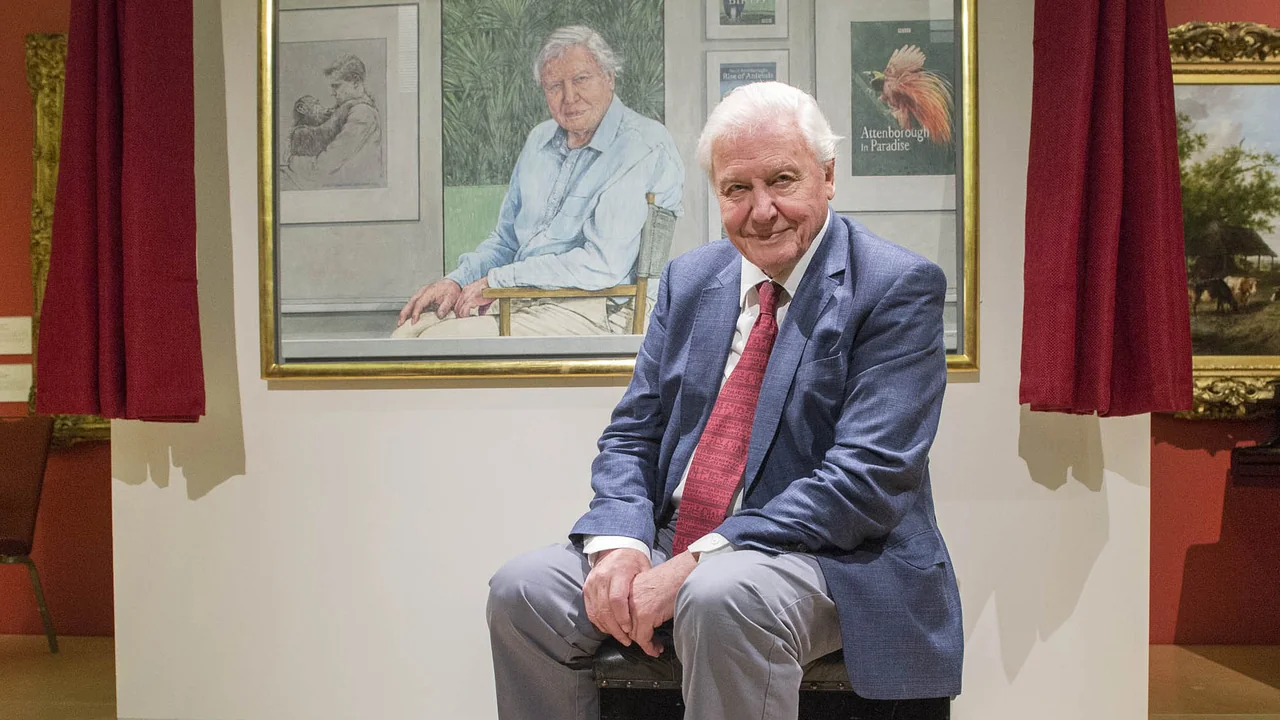
Another image documents the 2016 unveiling of Attenborough in Paradise, a portrait by Leicester-born artist Bryan Organ. The work is now held in the Leicester Museums & Galleries collection.
Together, the photographs show a relationship sustained well beyond Attenborough’s childhood. The museum that helped him investigate his earliest finds later welcomed him back as an internationally recognised broadcaster and naturalist.
The Attenborough family’s wider Leicester connections
The association extends across the family. Mary Attenborough, David’s mother, supported the museum, while his brother Lord Richard Attenborough became an actor and film director. Richard donated a collection of Picasso ceramics to the museum in 2007.
Their brother John Attenborough pursued a career in the motor trade, serving as managing director of Mann Egerton and leading its Rolls-Royce division. He also headed the British operations of Alfa Romeo.
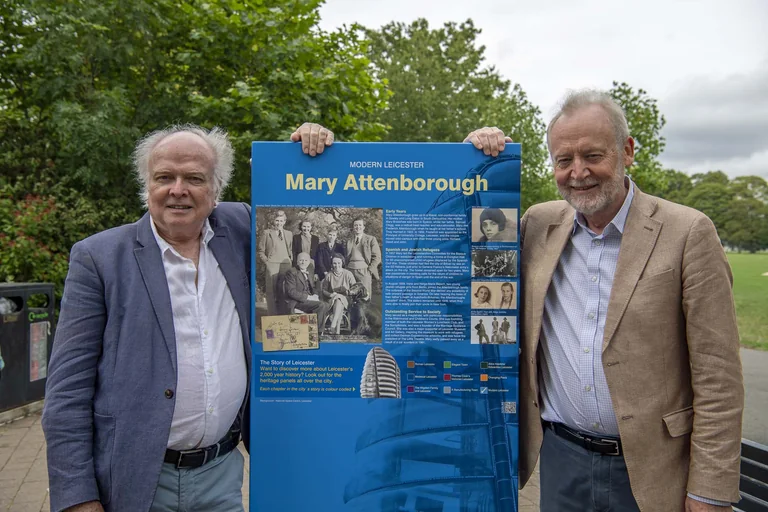
The next generation has participated in preserving the family’s local history. Michael Attenborough, Richard’s son, and Dr Robert Attenborough, David’s son, attended the launch of heritage panels dedicated to the Attenborough family and Mary Attenborough.
Leicester landmarks preserve the family story
The double-sided heritage panels stand in Victoria Park, on the footpath beside the Attenborough Building on the University of Leicester campus. They locate the family’s story within the same area where the three brothers grew up and attended school.
Leicester Museum & Art Gallery holds the portrait by Bryan Organ alongside the natural-science and geological collections that influenced David Attenborough as a child. His centenary draws those strands together: the fossils he carried into the museum, the campus where he lived and a family connection with Leicester that began in 1932.
Source: Leicester Museums and Galleries News
Context & actions About this article
Source check Source trail
The dates, places, family connections and quoted recollection were checked against the account published by Leicester Museums & Galleries.
- Checked the stated 8 May 2026 centenary date.
- Checked the family’s 1932 move to the University College campus.
- Checked Attenborough’s connection with the museum’s fossil and geological collections.
- Checked the dates of documented museum visits and the Bryan Organ portrait unveiling.
- Source
- Leicester Museums & Galleries
- Scope
- Leicester
- Updated
- 2026-08-08 09:20
Source check
Report a trust issue
Send a clear signal to community moderation if the source, facts or context need review.
Comments