North Yorkshire warned not to spark moorland fires
By the demoduck.co.uk editorial team
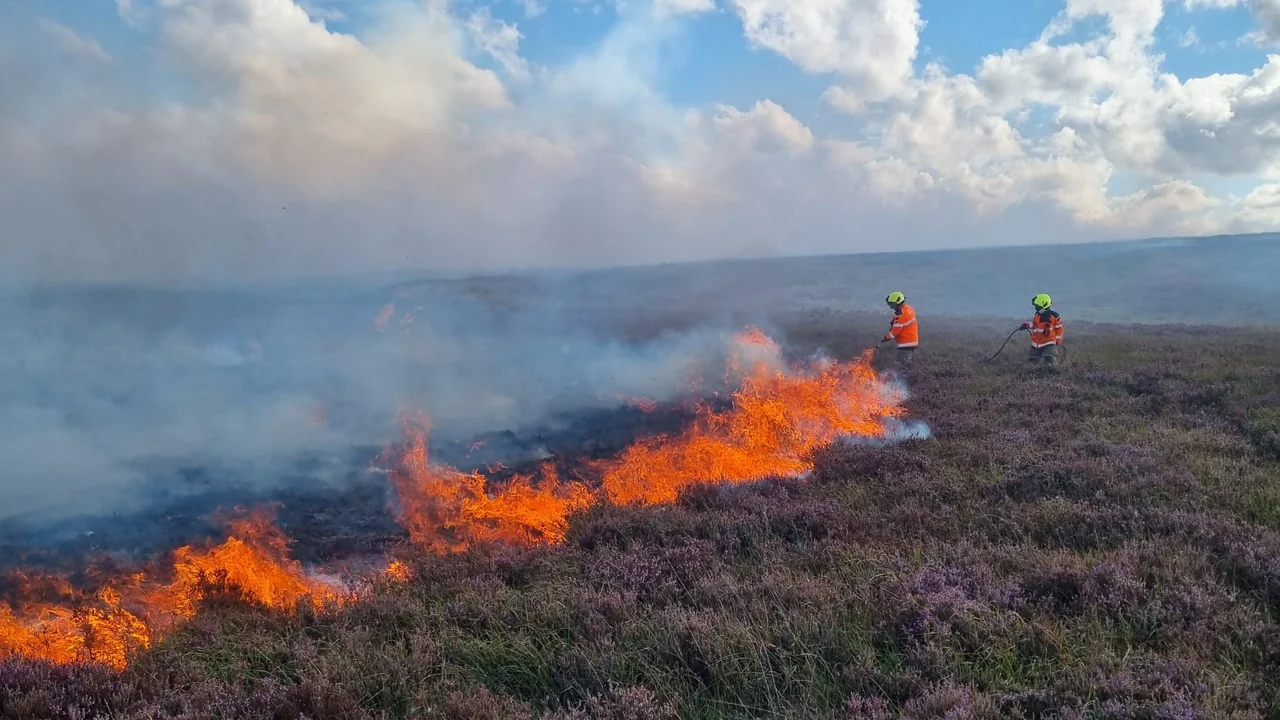
Visitors, drivers and residents around the North York Moors are being urged to avoid small fire risks after the Langdale Forest and Fylingdales Moor wildfire became the biggest recorded wildfire in the history of the national park.
The fire was declared a major incident on 12 August 2025. North York Moors National Park has since launched the Don’t Spark Disaster campaign, warning that a cigarette end, match, glass bottle, barbecue or campfire can be enough to start a blaze in dry vegetation.
Read also: Love Parks Week: 5 free North Yorkshire parks to visit
Small items that can start a moorland fire
The warning is aimed at everyday behaviour rather than unusual incidents. North Yorkshire Fire and Rescue Service receives many call-outs for fires across the national park each year. Some are contained quickly, while others take days to bring under control.
The campaign highlights three common risks:
- Cigarettes or matches discarded on paths, verges, car parks or from vehicle windows.
- Glass bottles and reflective litter that can focus sunlight onto dry grass or heather.
- Disposable barbecues, gas barbecues and campfires used in places where heat can spread into vegetation.
The practical advice is simple: take litter home, never throw smoking materials from a vehicle, avoid open flames on moorland, and follow local fire warnings during dry weather.
Why the North York Moors warning is sharper after Fylingdales Moor
The Langdale Forest and Fylingdales Moor wildfire showed how quickly a local fire can become a major incident. Once flames move across open moorland, the response is no longer only about putting out visible fire.
The cost can include damaged habitats, displaced wildlife, pressure on farms, harm to archaeological sites and long closures or restrictions for visitors. Recovery work can continue long after smoke has cleared, particularly where peat, heather and woodland edges have been affected.
For nearby communities, large wildfires also mean road disruption, emergency access pressures and the possibility that fire crews are tied up for long periods. That is why prevention is being framed as a public safety issue, not just a countryside code reminder.
Drivers have a direct role in preventing sparks
The campaign specifically points to cigarette ends and matches thrown from car windows. Roads through and around the North York Moors often pass close to verges, dry grass and open land, so a tiny ember can land where it is hard to spot until flames have already spread.
Drivers can reduce the risk by keeping smoking materials inside the vehicle until they can be disposed of safely, checking that nothing hot is dropped near car parks or lay-bys, and not leaving bottles or shiny waste behind after stops.
People visiting picnic spots, walking routes and viewpoints should treat any barbecue or campfire as a potential ignition source. Even when flames appear out, heat can remain in ashes or ground surfaces.
What visitors should do before heading out
Anyone planning a visit to the North York Moors should check local fire safety advice, avoid lighting fires, and pack food that does not require cooking on site. If a fire is seen, the safest response is to move away, call emergency services and give the clearest location possible.
North York Moors National Park is using the Don’t Spark Disaster campaign to keep attention on preventable causes after the 12 August 2025 major incident. The message is directed at routine choices made on roads, footpaths, picnic areas and moorland edges.
Source: North Yorkshire Council
Context & actions About this article
Source check Source trail
This article was adapted from a North Yorkshire Council public safety notice about wildfire prevention in the North York Moors.
- Checked the date of the Langdale Forest and Fylingdales Moor wildfire major incident as 12...
- Matched the safety advice to the risks named in the source: smoking materials, glass litte...
- Identified the factual coverage as the North York Moors area rather than the council publi...
- Source
- North Yorkshire Council
- Scope
- North York Moors, North Yorkshire
- Updated
- 2026-07-31 11:45
Source check
Report a trust issue
Send a clear signal to community moderation if the source, facts or context need review.

Comments