Barking freight hub rebuild targets direct trains to Europe

Work has begun to remove old sidings at Barking Eurohub, clearing more than five acres for longer international freight trains and a new intermodal terminal. The £15 million redevelopment of the 40-acre east London site is intended to restore regular direct freight services between Britain and continental Europe through the Channel Tunnel.
Network Rail confirmed the start of construction on 13 July 2026. The project is entering a three-year delivery programme, although an exact opening date for the completed terminal or its first international service has not been announced.
| Project detail | Confirmed position |
|---|---|
| Investment | £15 million |
| Site | 40 acres in Barking, east London |
| Land released | More than five acres |
| Current train limit | Around 350–400 metres |
| Planned train length | Up to 700 metres |
| Delivery programme | Three years |
Five acres cleared for a modern freight terminal
The existing sidings restrict how much of Barking Eurohub can be used. Their removal will make space for new berthing sidings, while the connecting freight tracks and terminal sidings will be remodelled for continental trains measuring up to 700 metres.
That is a substantial increase from the current operational limit of approximately 350 to 400 metres. Longer trains can carry more containers or liftable lorry trailers in a single movement, improving the terminal’s potential capacity without requiring the cargo itself to be unloaded when switching between rail and road.
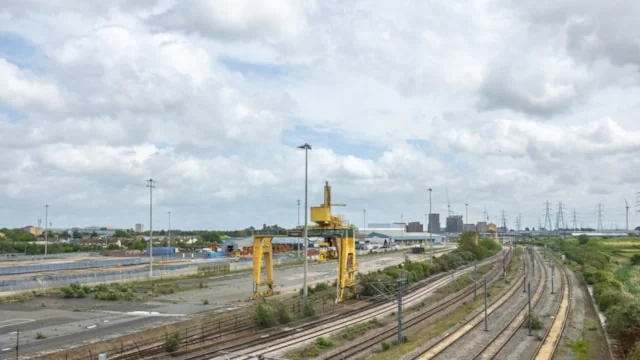
The completed site is planned as a campus of freight, distribution and storage operations. Network Rail is contributing infrastructure expertise, with Platform4 and Legal & General involved in the redevelopment partnership.
Channel Tunnel routes will connect four major markets
Barking Eurohub is positioned to handle freight travelling between Britain and France, Germany, Italy and Spain through the Channel Tunnel. Cargo arriving in east London could then move onwards across the capital and South East, while British exports would gain a direct rail route towards continental markets.
Regular cross-Channel rail freight has been significantly underused in recent years, according to Network Rail. The Barking works are presented as the first physical stage in reversing that decline, but the source has not yet identified prospective operators, service frequencies or launch routes.

Rail Minister Lord Hendy said the investment was designed to open trade links and provide faster, less carbon-intensive transport between the UK and Europe. Network Rail chief executive Jeremy Westlake said restoring regular services would strengthen European trade while shifting lorry traffic away from roads.
Longer trains could reduce pressure on South East roads
The project’s local transport effect will depend on how much freight transfers from road haulage to rail. Network Rail expects container movements through Barking to replace some long-distance lorry journeys, reducing motorway congestion, emissions and wear on road infrastructure across the South East.
No construction employment figure or forecast for permanent jobs at the terminal has been released. The Government links rail-freight expansion with wider supply-chain resilience, economic growth and employment, while the distribution and storage campus could create further commercial activity at the site.
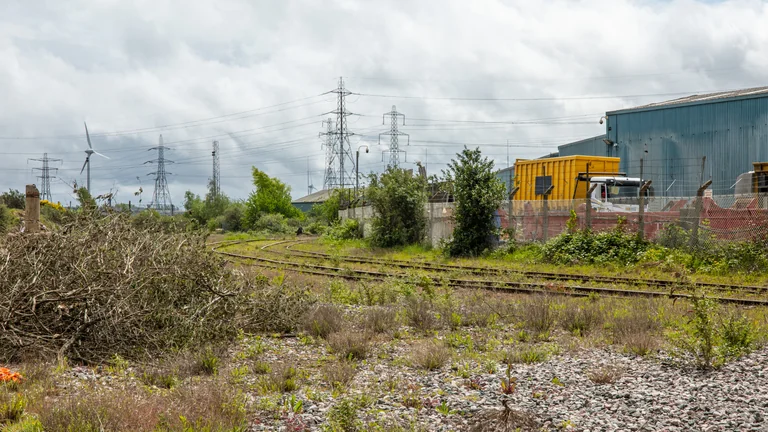
Income generated at Barking Eurohub is due to be reinvested in freight growth elsewhere in Britain. The redevelopment also forms part of the freight mandate planned for Great British Railways, the future national body responsible for operating and developing the railway.
Three-year programme starts with track clearance
The initial phase centres on removing restrictive infrastructure and preparing the site for new berthing sidings. Track connections and terminal sidings will then be configured for trains up to 700 metres long as the intermodal facility takes shape.
Rail Freight Group director general Maggie Simpson OBE described the site as essential to the future of international rail freight and said the group expected new services to begin in due course. A firm completion date and timetable for the first regular Channel Tunnel freight train remain the project’s next major confirmed milestones.
Source: Network Rail News
Context & actions About this article
Source check Source trail
Project costs, dimensions, partners and delivery details were checked against Network Rail’s announcement dated 13 July 2026.
- Confirmed the stated £15 million investment and three-year delivery programme.
- Checked the 40-acre site size and the release of more than five acres.
- Compared the current 350–400 metre train limit with the planned 700-metre capability.
- Distinguished confirmed construction work from opening dates and service details that have...
- Source
- Network Rail News
- Scope
- United Kingdom
- Updated
- 2026-07-21 12:42
Source check
Report a trust issue
Send a clear signal to community moderation if the source, facts or context need review.



Comments